Crypto, how to build a plan for the next cycle without losing everything
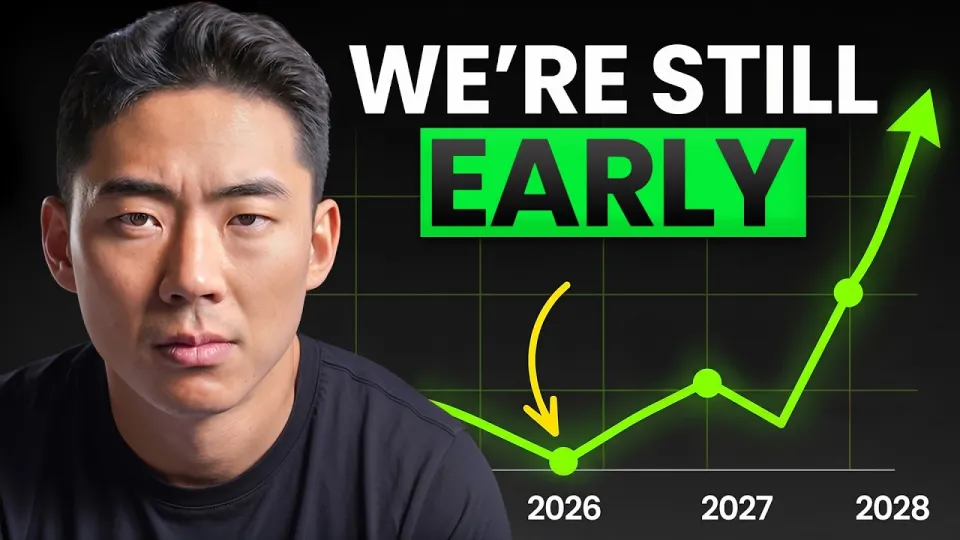
Video: my plan to make millions in crypto 2027
Need articles like this for your video? They help promote it on YouTube and Google — order them in the Telegram bot @sat_sit_bot. Articles with your video embedded are written and posted by the bot itself — on popular topical sites (no ads). Try it free: 50 articles on us.
· based on the channel Brian Jung
Crypto planning for the next cycle comes down to three decisions: what you believe about liquidity, which narratives you allocate to, and how much you are willing to lose. Brian Jung's video "my plan to make millions in crypto 2027" walks through exactly that sequence — a bullish macro case, the narratives he expects to lead, and his own position plan. His paid research product sits behind the Kaizen Pro waitlist, while the free market report is available through the Kaizen newsletter.
Why the bullish case rests on liquidity, not on faith
The bullish argument in the video is structural: crypto is treated as a liquidity-sensitive asset class that reprices when money becomes cheaper and access becomes easier. That framing matters because it turns "I'm bullish" into a testable claim — if liquidity tightens, the thesis weakens.
The inputs usually cited for that case are well known. Central banks cutting rates lowers the cost of capital and pushes investors further out the risk curve. Spot Bitcoin ETFs turned a niche asset into something an allocator can buy inside a brokerage account, which changes who the marginal buyer is. And stablecoin legislation in the US has moved dollar-backed tokens from a grey zone into a regulated product category, which is the point one viewer made when arguing that banks getting rejected on crypto custody might actually be healthier for the asset than bank control.
That last idea is worth sitting with. Crypto's original pitch was disintermediation — you hold the asset, not a custodian's receipt of it. Institutional wrappers bring capital, but they also bring the possibility that most future holders never touch a private key. Both things can be true at once, and a plan should account for the version of crypto you actually want exposure to.
The narratives that carry a cycle
The video's outline splits the middle section around narratives, which is the right instinct: in crypto, sector rotation usually explains more of your return than the direction of Bitcoin does. Four themes recur across cycles and are named in the video's tags and outline.
- Bitcoin as the liquidity proxy. BTC is the first thing institutions buy and the last thing they sell. It sets the beta for everything else.
- Ethereum and the smart-contract layer. ETH captures activity in DeFi, tokenization and L2 rollups. When on-chain activity rises, ETH and its ecosystem usually participate.
- Altcoins as a rotation trade. Capital leaves BTC and ETH and hunts for higher returns in smaller caps. This is where the largest gains and the largest drawdowns both live.
- DeFi, AI-crypto and infrastructure. These are the themes that generate fresh narratives rather than recycled ones — real yield, compute marketplaces, and settlement layers.
A practical filter: a narrative is investable when it has revenue or usage you can measure, not just a chart. If you cannot explain in one sentence who pays for the product, you are buying attention, not fundamentals.
How to size a position so a bad call doesn't end you
Position sizing is the part of the plan that determines whether you survive to the next cycle. A thesis can be right and still ruin you if the position is too large for the volatility involved.
A workable structure looks like this:
- Define the total amount you can lose entirely. Not a drawdown number — the amount that, if it went to zero, would not change your life.
- Split by conviction tier. Core holdings in BTC and ETH, a middle tier for large-cap alts with real usage, and a small speculative sleeve for new narratives.
- Pre-commit to rules. Write down what would make you sell — a thesis break, not a red candle. Review quarterly rather than hourly.
- Keep a cash buffer. Dry powder is what lets you act when sentiment collapses instead of watching.
- Log every entry with a reason. If you cannot write the reason in one line, you do not have one.
The video's own disclaimer is blunt about the stakes: crypto investments are extremely risky and highly speculative, with significant potential for loss due to volatility, and the content is educational rather than financial advice. That is not boilerplate — it is the constraint your sizing has to respect.
The questions viewers actually ask
The comment section under the video reads like a stress test of the whole genre, and the doubts are legitimate. The most-liked reaction amounts to: the same bullish case was made in a previous cycle, and I lost everything. Another summarizes the whole genre as "it could go up or it could go down." A third predicts the cycle top is years later than the video implies.
Those are not trolls — they are three distinct failure modes.
- Survivorship bias. Bullish content is published by people who survived. The ones who were wiped out do not post plans.
- Timing mismatch. A correct long-term thesis can still produce a 70% drawdown before it pays. If your horizon is three months and the thesis needs three years, you will sell at the bottom.
- Narrative lag. By the time a theme is a video topic, the easy part of the move may be behind it.
The counterweight in the same comment thread is quieter but real: people who have been in crypto a long time and still choose to listen, and traders who simply state they will put half their portfolio into altcoins. That last one is the most useful data point in the whole section — a 50% altcoin allocation is a very different risk profile from a 5% one, and it should be a deliberate decision, not a default.
What to take from the video and what to ignore
Take the structure: macro thesis, then narratives, then position plan. Ignore the dollar figure in the title — "millions" is a marketing hook, not a forecast, and no plan can promise it. The transferable part is the discipline of writing down why you own something before you own it.
One more note on the source: Brian Jung is a creator who publishes market commentary and paid research, and the video links to a waitlist for that product plus a free newsletter. Treat any paid research as an input, not an answer key. The person who is accountable for the outcome is the one holding the position.
Useful links
- Kaizen Pro waitlist — access page for the paid research product
- Kaizen free crypto market report newsletter — free market commentary by email
- Brian Jung on X
- Brian Jung on Instagram
- Risks & Disclaimers document
Bottom line
A crypto plan is only as good as its weakest assumption, and in this framework the weakest assumption is liquidity staying loose. Brian Jung's breakdown is useful precisely because it separates the macro case from the narrative bets and from the sizing rules — three layers you can stress-test independently. Build your own version, write the exit conditions before you enter, and size so that being wrong is survivable. If you want his research as an input, start with the Kaizen Pro waitlist and read the free newsletter first.
Key takeaways
- Brian Jung's video outlines a framework built on three blocks: why he is bullish, which narratives drive the next cycle, and how he sizes positions.
- The core thesis is liquidity-driven: rate cuts, ETF inflows and institutional adoption are treated as the main fuel for a crypto uptrend.
- Narratives named in the video's outline include Bitcoin, Ethereum, altcoins, plus DeFi and AI-adjacent crypto themes.
- The video's own disclaimer states crypto is extremely risky and speculative, with significant potential for loss due to volatility.
- Viewer reactions split between long-term believers and traders who say they lost money following similar calls in a previous cycle.
Questions & answers
Is Brian Jung's crypto plan financial advice?
No. The video explicitly states the content is for educational and entertainment purposes only and is not financial advice. It also warns that crypto is extremely risky and speculative, and that viewers should not invest more than they can afford to lose.
How much of a portfolio should go into altcoins?
There is no universal number, but allocation should follow conviction and volatility tolerance. A small speculative sleeve behaves very differently from a 50% altcoin weighting, and the second profile can lose most of its value in a deep drawdown even if the long-term thesis is right.
Why do people lose money following bullish cycle calls?
Mostly through timing and sizing rather than through being wrong about direction. A thesis that plays out over years can still produce a severe drawdown first, and positions sized too large force selling near the bottom.
What narratives does the video focus on?
The outline and tags center on Bitcoin, Ethereum and altcoins, with the middle section devoted to the narratives expected to drive the next cycle. The practical takeaway is to separate a measurable theme from pure hype before allocating.
Source: my plan to make millions in crypto 2027 · Markdown version